Date: 19 November 2026
Place: University of Würzburg
Deadline: 5 June 2026 extended until 17 June 2026
To prepare your paper for the postgraduate forum, please refer to the general guidelines for presentations (last updated 2026).
 BritCult
Date: 19 November 2026
Place: University of Würzburg
Deadline: 5 June 2026 extended until 17 June 2026
To prepare your paper for the postgraduate forum, please refer to the general guidelines for presentations (last updated 2026).
2026 conference of the German Association for the Study of British Cultures (BritCult), including its members’ assembly. The Call for Papers, the programme and registration details can be found on the conference website.
BritCult members can apply for bursaries to cover travel and accommodation.
Date: 19–21 November 2026
Place: University of Würzburg
Deadline: 15 April 2026
Date: 8–9 May 2026
Venue: Internationales Begegnungszentrum (Bergstraße 7a, 18057 Rostock)
Organisers: Madeline Becker, Hanne Bolze
Richard Stinshoff has died, aged 81, in December 2025. We miss him a lot. He was a meticulous scholar and teacher of what he usually called British Studies and he was the president of BritCult from 2004 to 2007.

He started as a student in English and German Studies with a focus on the medieval period at Münster, but submitted a joint PhD-thesis in sociology of education at the then “rote Kaderschmiede” Bremen University. He found a job organising the now legendary Einphasige Lehrerausbildung in the founding period of Carl von Ossietzky University Oldenburg in the 1970s, where he became a member of staff in the English and American Studies Department in 1982. There he stayed until he retired as Akademischer Direktor in 2009. However, for many years he continued to teach courses on British sociopolitical issues to ensure that the focus remained on offer. Over these years and decades, he not only established Landeskunde (as it was called then) as a profile within English and American Studies at Oldenburg, but also helped to introduce and define British Cultural Studies as an academic field more generally. He was among those who stuck with an approach that took the material and institutional dimensions of social and polity structures as seriously as their discursive and representational ones – a consequence, perhaps, of both his training in Marxism and his childhood in the post-war Ruhr Area.
The Festschrift produced on the occasion of Richard’s retirement in 2009 bore the title The Workings of the Anglosphere. This summarises Richard’s understanding of Cultural Studies very well: analysing a phenomenon’s historical aspects, structural frameworks, and variations of agency, synthesizing approaches from social history, political science, sociology, and social geography, among others. This approach owed a lot to the work of E.P. Thompson, about whom Richard wrote two chapters in edited volumes (in 1992 and, with his colleague Jutta Schwarzkopf, in 2011). The intention was to give people and perspectives a voice that were – and are – too often overlooked in both academia and the ‘real world’. This giving voice took different shapes in different projects. Rise Like Lions: Sozialgeschichte Englands in Quellen und Dokumenten 1547-1915, published together with his friend, longtime colleague and collaborator, Jens-Ulrich Davids, in 1982, provided a deliberate counter-history to the dominant Whig approach, using the voices and testimonies of those people who had experienced the merciless character of power struggles first-hand. Richard did not write monographs but contributed to many edited books and (co-)edited several himself. He strongly propagated multi-disciplinarity and combined perspectives from different academic fields – this applies for example to his 1989 publication Die lange Wende: Beiträge zur Landeskunde Großbritanniens am Ausgang der achtziger Jahre, as well as for the 1996 The Past in the Present (again co-edited with Jens-Ulrich Davids), which included texts by historians, political scientists, urban geographers and scholars of literature. This latter book contained the proceedings of the Fifth Annual British and Cultural Studies Conference at Oldenburg in 1994. These meetings were the forerunners to what became later institutionalised as the BritCult conferences.
Most of his edited books and special issues were the product of conferences by either BritCult (e.g. Postsecular Britain, jointly edited with his Oldenburg colleague Anton Kirchhofer in 2009) or the German Association for the Study of British History and Politics (one co-edited with his friend Hans Kastendiek in 1994 and another one with Kastendiek and Roland Sturm in 1999: The Return of Labour. A Turning Point in British Politics?). The last book he reviewed for JSBC in 2024 duly dealt with politics as well – it discussed a monograph on British ‘landslide’ elections.
Cooperation was a distinctive feature of his work and it was very visible in his everyday struggles in the institution university (he taught us to navigate academia and its peculiarities) as well as in his interactions with students. Course discussions could be intense but would be defused by Richard’s self-ironic and jovial moderation just in time. His very special concept of teaching showed up most clearly in the numerous summer schools and excursions that he co-organised (again usually together with Jens-Ulrich Davids) – visits to Britain’s post-industrial realities or, less frequently, to the US, the most spectacular one tracing the 1804 Lewis & Clark expedition in 2005.
We wouldn’t be where we’re today without him.
Sebastian Berg (Bochum) & Jakob F. Dittmar (Malmö)
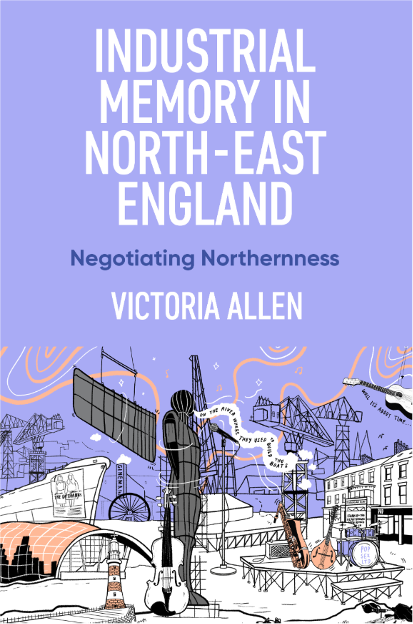
Industrial Memory in North-East England: Negotiating Northernness
Victoria Allen
Industrial memory in North-East England examines how the region’s industrial myth and memory have been articulated in the renegotiation of northernness. The book offers a critical contextualisation of the concept of northernness and the English North, and introduces the concept of the Pop Cultural Portfolio, a mixed-methods approach to conjunctural analysis in cultural and memory studies. The book provides six richly illustrated case studies to demonstrate the practical application of cultural studies’ expansive and inclusive understanding of texts, bringing together materials from North East football, folk, indie and exhibition culture to establish how the North East’s industrial past continues to be remembered and functionalised as industrial memory. In turn, the conjunctural analysis demonstrates how industrial memory is articulated and mythologised as north(east)erness in contemporary popular culture.
Dem Tode zum Trotz: Unsterblichkeit und Wiedergeburt in der Phantastik / Defying Death: Immortality and Rebirth in the Fantastic
Kristin Aubel, Maria Fleischhack, Marion Gymnich, Carsten Kullmann and Aylin Dilek Walder (editors)
Unter dem Titel „Dem Tode zum Trotz: Unsterblichkeit und Wiedergeburt in der Phantastik“ widmete sich die Inklings-Gesellschaft vom 29. April bis 1. Mai 2023 an der Otto-von-Guericke-Universität Magdeburg den zahlreichen Schnittmengen dieser Themen und der Phantastik. […] Solche Schwerpunkte lassen sich häufig in den Werken der Oxforder Inklings identifizieren – man denke etwa an Valinor oder Aslans Land als Orte der Unsterblichkeit – doch die hier versammelten Beiträge widmen sich neben den Schriften der Inklings auch Werken der zeitgenössischen Phantastik. Das Jahrbuch beginnt mit Abhandlungen zu Tolkien und Lewis und erweitert dann den Spielraum, in dem die Themen des Symposiums behandelt wurden.
Rethinking Gothic Transgressions of Gender and Sexuality
Sarah Faber and Kerstin-Anja Münderlein (editors)
From early examples of queer representation in mainstream media to present-day dissolutions of the human-nature boundary, the Gothic is always concerned with delineating and transgressing the norms that regulate society and speak to our collective fears and anxieties. This volume examines British and American Gothic texts from four centuries and diverse media – including novels, films, podcasts, and games – in case studies which outline the central relationship between the Gothic and transgression, particularly gender(ed) and sexual transgression. This relationship is both crucial and constantly shifting, ever in the process of renegotiation, as transgression defines the Gothic and society redefinestransgression. The case studies draw on a combination of well-studied and under-studied texts in order to arrive at a more comprehensive picture of transgression in the Gothic.
Fan Podcasts: Rewatch, Recap, Review
Anne Korfmacher
Starting from the observation of the ubiquity of fan podcasts engaging in media commentary, this book explores three fan podcast genres in which commentary manifests as a structuring form: rewatch and reread podcasts, recap podcasts, and review podcasts. The author conducts a formalist genre analysis of these podcasts, close reading nine case studies to describe how the three genres function and how different fan labour manifests in podcasting. Each case study teases out the themes, style, and formal constellations of thethree podcast genres, shows how different fans activate the affordances of podcasting and commentary, and reveals the distinct generic functions of the three podcast genres.

The Tauchnitz Edition and Related Paperback Series: English Literature in YourPocket
Melanie Mienert, Stefan Welz and Dietmar Böhnke (editors)
The Tauchnitz Edition and Related Paperback Series: English Literature in Your Pocket unites a broad variety of interests and different perspectives concerning the legacy of the Tauchnitz Edition in particular and English-language paperback series in general. It provides an international and interdisciplinary approach to the ‘paperback revolution’ as part of media culture throughout the 19th and 20th centuries. […] The Leipzig-based Tauchnitz publishers, renowned all over the world for their series of affordable pocketbooks in English, produced more than 5000 volumes within the course of over 100 years. Cultural and literary repercussions of this unique achievement have been far-reaching since the late 19th century. […] Still in present times, the Tauchnitz Edition and its successors are stimulating both academic research in various fields and the enthusiasm of collectors and readers.
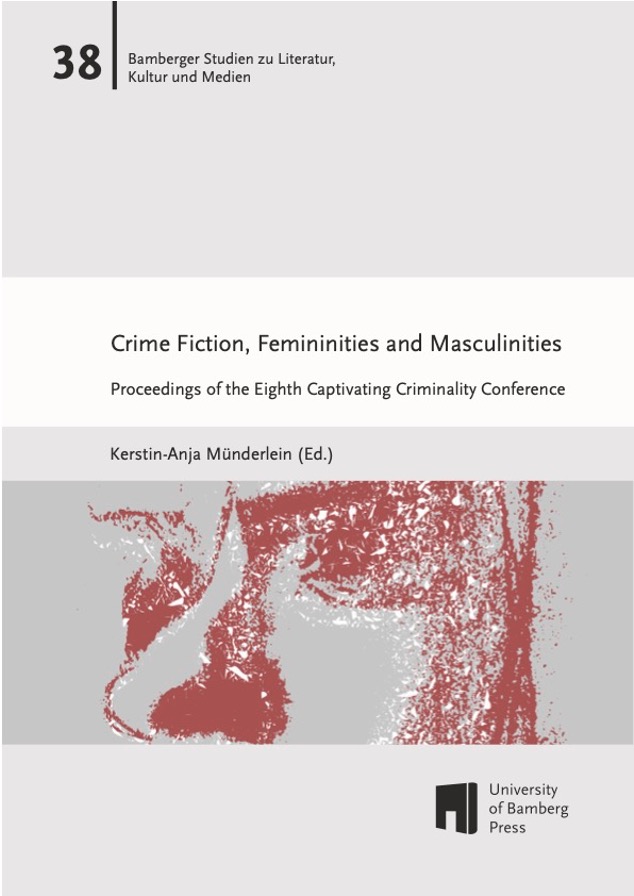
Crime Fiction, Femininities and Masculinities: Proceedings of the EighthCaptivating Criminality Conference
Kerstin-Anja Münderlein (editor)
The present volume is a collection of select papers presented at „Captivating Criminality 8: Crime Fiction, Femininities and Masculinities“ (Bamberg, July 2022), the eighth annual conference of the International Crime Fiction Association. As gender and crime fiction is a popular topic with researchers from all areas of (world) crime fiction and the contributionsranging from the highly popularised Victorian Jack the Ripper case to contemporarydomestic noir novels written by authors such as Gillian Flynn, this book covers crimefiction studies from a broad variety of angles. The chapters in this book cover texts from all over the world in a joint effort to show that crime fiction (studies) is omnipresent, diverse, and – above all – topical and that gender is one of the mainstays of the genre and a determinant of its topicality and diversity.
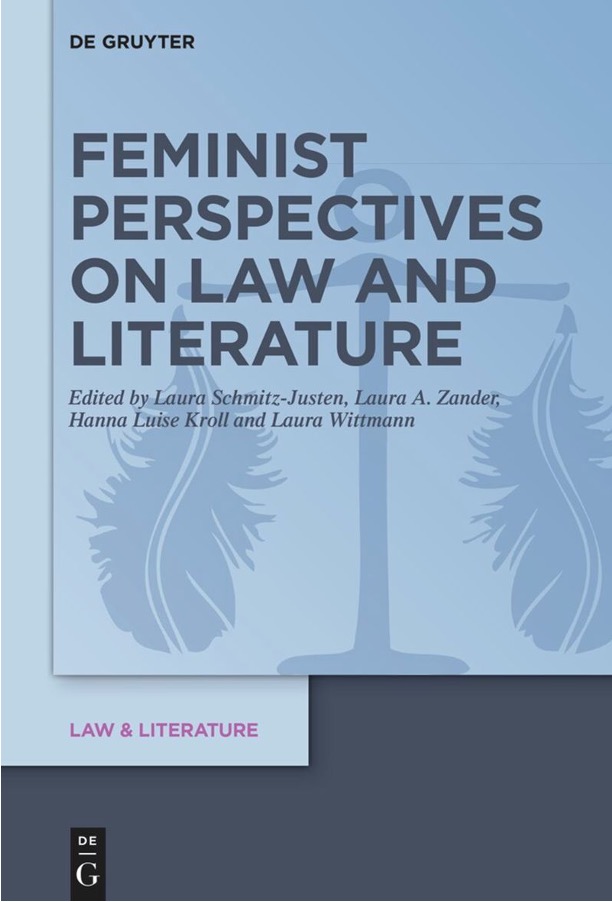
Feminist Perspectives on Law and Literature
Laura Schmitz-Justen, Laura A. Zander, Hanna Luise Kroll and Laura Wittmann (editors)
Bringing together more than twenty international researchers from related disciplines, thisvolume is the first to bring questions of intersectional feminism to the forefront of law and literature scholarship. From reproductive and (trans-)gender justice in law and literature to feminist practices that intervene in judicial discourse, this volume brings into focus a wide range of cultural and legal phenomena in which gender and the law intersect in literary texts. The volume’s commitment to intersectionality fittingly extents to its very make up: the contributors were selected to represent a diverse range of positions in terms of their gender, career stage and nationality.
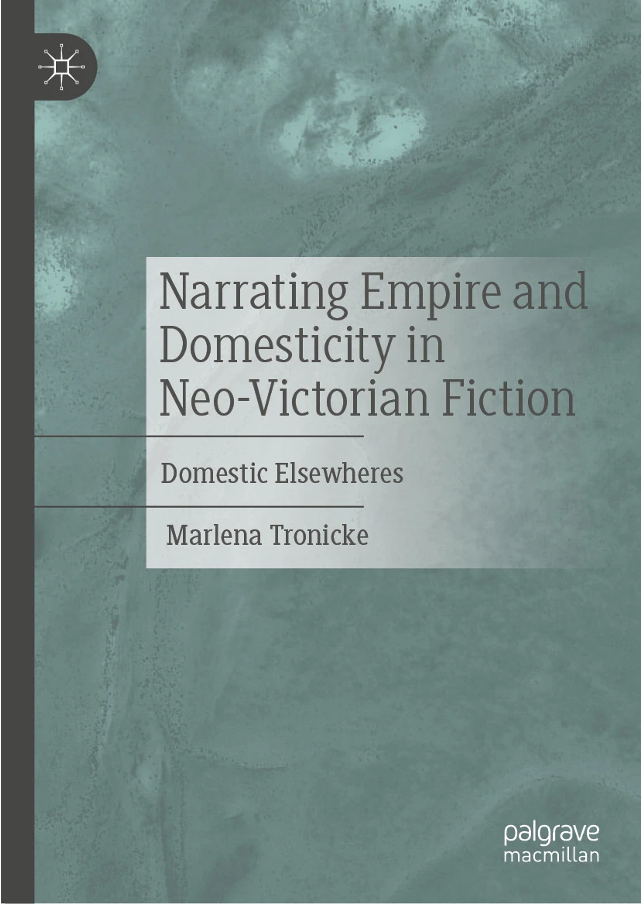
Narrating Empire and Domesticity in Neo-Victorian Fiction: Domestic Elsewheres
Marlena Tronicke
Systematic re-readings of empire have so far played a comparatively minor role in neo-Victorian scholarly debate. This monograph addresses this lacuna by examining how neo-Victorianism negotiates constructions of empire in conjunction with the domestic. Drawing on a range of neo-Victorian novels as well as their Victorian intertexts and bringing these into dialogue with postcolonial theory, it asks how neo-Victorian fiction engages with, perpetuates, or subverts Victorian imaginaries of urban British ‘centres’ in opposition to remote imperial ‘margins.’ It examines why domesticity – broadly understood asideologically charged concepts of family, home, and belonging based on formations ofgender, sexuality, and class – can never be constituted independently of empire. In addition, the book raises questions regarding neo-Victorianism’s larger potentiality of narrating empire, suggesting that it is precisely the disorienting moments that constitute a characteristically neo-Victorian mode of exploring the entanglements of empire and domesticity.
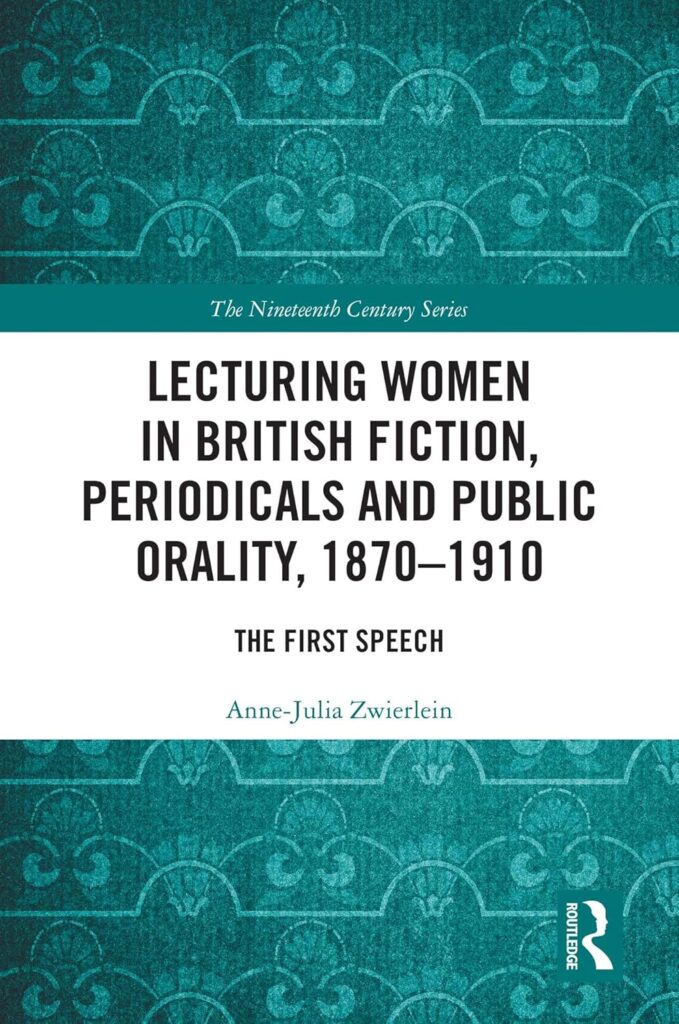
Lecturing Women in British Fiction, Periodicals and Public Orality, 1870-1910: The First Speech
Anne-Julia Zwierlein
This book examines the emergence of women as audiences and speakers on the British metropolitan lecture circuit and in mass print representations from 1870 to 1910. Bringing together research on Victorian lecturing, periodicals, voice studies and the cultural history of feminism, it sheds new light on the interdependence of orality and print and the rise of the British women’s movement. […] Undertaking an archaeology of women’s presence in the lecture hall, it explores conservative fantasies in fiction of the female speaking automaton alongside new writings that transformed women orators from objects of sensation into public agents. By analysing women’s collective self-education in rhetoric and elocution, this book traces the emergence in political fictions of key narrative tropes of oral performance: the surprise encounter in the lecture hall, the moment of conversion during a lecture and the symbolic ‘first speech’ of new suffrage recruits.
During the 2024 conference in Innsbruck, the General Assembly adopted the following position paper on strengthening mid-level academic staff.
Date: 20 November 2025
Place: University of Bamberg
Deadline: 6 June 2025
To prepare your paper for the postgraduate forum, please refer to the general guidelines for presentations (last updated 2017).
Mark Schmitt. Spectres of Pessimism: A Cultural Logic of the Worst. Habilitation thesis.
Sina Schuhmeier. Changing the Record: Englishness, Popular Music, and the Song Lyric in the 21st Century. PhD thesis.
2025 conference of the German Association for the Study of British Cultures (BritCult), including its members’ assembly. Programme and registration details can be found on the conference website.
BritCult members can apply for bursaries to cover travel and accommodation.
Date: 20–22 November 2025
Place: University of Bamberg
Deadline: 19 March 2025
Date: 9–10 May 2025
Place: University of Hamburg
Please note that BritCult members can apply for bursaries to cover travel and accommodation.