

Annual Conference of the German Association for the Study of British Cultures
19–21 November 2026
University of Würzburg




Call for Papers
‘Populism’ is omnipresent. In the Anglophone world, the frequency of the term’s use peaked around the Brexit vote and Trump’s first election (Herkman 2022; Paul et al. 2019), and the Cambridge Dictionary selected it as ‘Word of the Year’ for 2017. Almost a decade later, ‘populism’ still serves as a signature term for the climate of the present. In political debates and private conversations, on TV screens and in social media, in institutional debates and on the pages of popular and academic treatises, the term is played to capture a complex and volatile articulation of strategies and dispositions that apparently dominates moods and developments not only in the UK and the US, but also in Germany, Russia, Central and Eastern Europe, and indeed all across the globe (Moffit 2020; Schiller 2018; Schwenck 2023). Once relegated to the margins, what we call ‘populism’ has moved to the centre not only of society and politics but also of culture and the arts. If populism professes to translate cultural dispositions into a political programmatic, then cultural studies is ideally poised for its critical examination. What is usually deemed to be at the heart of populist discourses is a binary opposition between the elite and ‘the people’, often couched as a rhetoric of ‘us’ versus ‘them’ (McGuigan 1992; Kranert 2020). Populist discourses thus seem to press the necessity that ‘the people’ must come into their own, but it is unclear whether they are meant do so as political agent or political object.
BritCult 2026 addresses the need for systematic attention to the cultural roots, the cultural practices, and the cultural assumptions of populism, and possibly also the cultural acts and agendas necessary to wrestle with populist cultures past and present. Claiming to mobilize an integrated culture of ‘the people’ not only against impoverishment and elitism but also against cultural heterogeneity and dispersion, populism determinedly politicizes culture and culturalizes politics If you are interested in contributing a 20-minute paper, please send your abstract (c. 300 words) and a short bio-note (c. 150 words) by 15 April 2026 to anglistik-britcult2026@uni-wuerzburg.de.
Programme
| Thursday, Nov. 19 | |
|---|---|
| 12:30 | Board Meeting BritCult (Venue 1: Schelling-Forum: Bibliothek) |
| 14:00-17:00 | Registration (Venue 1: Schelling-Forum) |
| 14:30 | Postgraduate Forum (Venue 1: Schelling-Forum) Theresa Stampfer (Magdeburg): Hypnotic Apparatuses: Cybernetic Mesmerism and Medi(c)al Technology in Mid-20th-Century Britain Mona Rosenberg (Potsdam): Celebrity/Fat: Affective Body Politics in the Post-Body Positivity Regime |
| 15:30 | Coffee Break |
| 16:00 | Postgraduate Forum (Venue 1: Schelling-Forum) Natalie Zwätz (Konstanz): Reading the Anthropocene in Early Modern British Literature: Protest, Terror, Sustainability Jacqueline Koshorst (Kassel): Mermaids at the End of the World: An Eco-Critical Approach to Kinship and Nature in 21st Century Queer Literature |
| 17:00 | Break & Walk to Spitäle (Venue 2) |
| 18:30 | Conference Opening (Venue 2: Spitäle) Thomas Baier (Dean, JMU Würzburg): Welcome Address Lena Steveker (BritCult President): Opening Words Zeno Ackermann, Gesine Drews-Sylla, MaryAnn Snyder-Körber, Kirsten Sandrock (Würzburg): Populism and Cultural Studies |
| 19:00 | Keynote 1 (Spitäle): Juha Herkman (University of Helsinki), “The Unholy Union Between Populism and Cultural Studies – Questions of Normativity” |
| 20:00 | Reception (Venue 2: Spitäle) |
| Friday, Nov. 20 | |
|---|---|
| 8:30 | Registration |
| 9:00 | Panel 1: Approaching Current Forms of Populism Sebastian Berg (Ruhr University Bochum): “The Good, the Bad, and the Ugly? Comparing the Populisms of Three ‘Populists’” Christina Flotmann-Scholz and Merle Tönnies (University of Paderborn): “Populist Structures under Scrutiny: Technocratic Populism and Meta-Linguistic Theatre” Raphael Zähringer (University of Tübingen): “Constructing Existential Emergency: Populism and Crisis Narratology” |
| 10:30 | Coffee Break |
| 11:00 | Panel 2: Populist Temporalities Naemi Victoria Dehde (University of Konstanz): “(Re)Presenting the National: Restorative Nostalgia and Working-Class Community in The Full Monty (2023)” Heike Raphael-Hernandez (JMU Würzburg): “When the World Was Still Good: Nostalgic Memories, Popular Songs, and Populism in the Trump Era” |
| 12:00 | Lunch Break / JSBC board meeting (Schelling-Forum: Bibliothek) |
| 14:00 | Panel 3: The Politics of Populism Elena Dück (JMU Würzburg): “Populism as a Strategy of the Far-Right: The Re-Ordering of Political Space in Europe” Judith Neder (TU Dresden): “‘We’ll tell you exactly how bad it is’: Conspiratorial Populism in The Liz Truss Show (2025–)” Pēteris Plakans (Riga Stradiņš University): “Populism and/in Parliamentary Speeches: Comparing Latvia and the UK” |
| 15:30 | Coffee Break |
| 16:00 | Keynote 2: Melanie Schiller (Radboud University): “Between Irony and Ideology – Music and the Popification of Far-Right Politics” |
| 17:15 | Members’ Assembly: German Association for the Study of British Cultures |
| 19:45 | Conference Dinner (Bürgerspital, Theaterstr. 19, 97070 Würzburg) |
| Saturday, Nov. 21 | |
|---|---|
| 9:00 | Panel 4: Populist Affect and Aesthetics Leyla Rommel (University of Bremen): “Soft Hierarchies: Aestheticized Power Structures and the Affective Life of Populism in Tradwife Content” Caroline Kögler (FU Berlin): “Against Sexy Fascism” Mir Ali Hosseini (University of Regensburg): “Hope Lies in the Proles? Orwell’s Populist Elitism and Its Cultural Afterlives” |
| 10:30 | Coffee Break |
| 11:00 | Panel 5: Digital Populisms Philipp Raab und Elke Wagner (JMU Würzburg): “Appropriation from Above: The Cycle of Populism & Digital Media Culture” Zaffar Manzoor (Riphah International University Islamabad, online): “A Discourse Analysis of Digital Religious Populism as a Communication Strategy and its Impact on Digital Citizens in Pakistan” |
| 12:00 | Short Break |
| 12:15 | Cultural Studies Colloquium: Interdisciplinary Perspectives on Populism |
| 13:15 | Concluding Remarks |
| 13:30 | End of Conference |
| 15:00 | Guided Tour of Würzburger Residenz (optional; registered participants only) |
Keynotes
Juha Herkman (University of Helsinki)
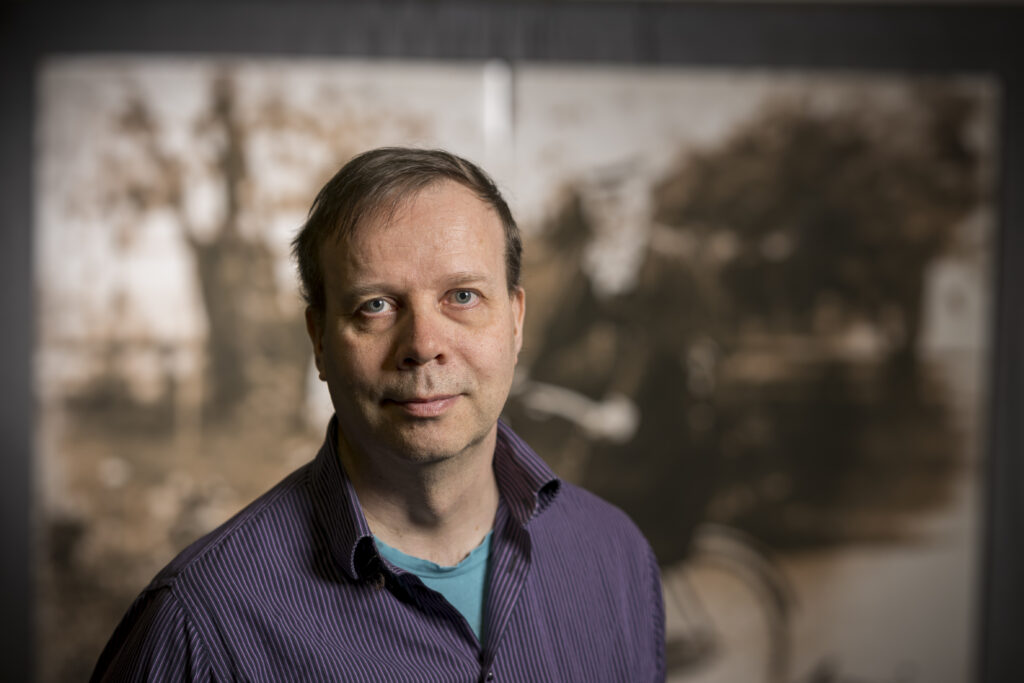
Juha Herkman is Professor of Media and Communication Studies at the University of Helsinki. Over the past decades, he has conducted extensive research on political communication and the interplay between populism and media. He also has a solid academic background in British cultural studies, with a particular focus on media culture. In addition to publishing a substantial number of articles in prestigious academic journals such as Cultural Studies, Acta Sociologica, Media, Culture & Society, and Journalism Studies, Herkman is the author of A Cultural Approach to Populism (2022, Routledge). He also co-edited Populism, Twitter, and the European Public Sphere (2024, Palgrave) alongside Emilia Palonen.
The Unholy Union Between Populism and Cultural Studies: Questions of Normativity
Abstract
The etymological roots of both “populism” and “popular” trace back to the Latin term populus, meaning “the people.” Consequently, cultural studies, which focuses on the everyday experiences of ordinary life, are often intrinsically linked to a populist understanding of the significance of the people. In certain strands of cultural studies, the role of popular culture has even emerged as a political driving force, with a common interpretation of everyday popular practices as emancipatory actions. Within the critical tradition, a normative vision of equal and liberal development is ingrained in British cultural studies.
One notable approach to populism has been developed by discourse theorist Ernesto Laclau, who, in collaboration with Chantal Mouffe, formulated what is known as articulation theory. This theory seeks to explain the emergence of anti-hegemonic social movements. According to Laclau, in populism, a group of individuals comes together to articulate various social demands, thereby forging a political identity that serves as a counterforce to hegemonic power, while simultaneously constructing a perception of “the people” as the underdog against their adversaries. In this process, it is the various popular markers of everyday life that shape the demands and articulations, rather than underlying social structures.
For Laclau, populism represents a progressive approach, wherein leftist movements have historically challenged the conservative societal status quo and championed emancipatory social interests. However, as Mouffe has also pointed out, in the twenty-first century, regressive right-wing populism has managed to formulate its own articulations of popular identity. In the current political landscape, the close relationship between Laclau’s populism theory and British cultural studies brings to light critical questions of normativity in both fields.
Melanie M. Schiller (Radboud University)

Between Irony and Ideology: Music and the Popification of Far-Right Politics
Abstract
Contemporary populist far-right movements increasingly embrace a Gramscian conviction that politics is downstream from culture. While Antonio Gramsci developed his notion to explain the production and contestation of cultural hegemony, contemporary far-right actors have appropriated them as a strategy for metapolitical intervention. This paper examines how the far right advances this project through what I term the popification of politics: the translation of political ideology into the forms, affects, and aesthetics of popular culture. Drawing on Walter Benjamin’s notion of the aestheticization of politics, I explore how far-right actors increasingly operate through music and digital aesthetics. At the same time, contemporary digital culture is characterized by what Simon Reynolds calls retromania: a nostalgic fixation on recycled pasts and imagined futures. Combined with post-ironic sensibilities and the fluid subject positions associated with the emerging metamodernist structure of feeling, these conditions create fertile ground for new forms of populist cultural politics.
The paper investigates the popification of far-right politics through the interconnected aesthetic formations of retrowave, vaporwave, and fashwave music. I show how far-right cultural producers appropriate genres rooted in nostalgia and ironic ambiguity, infusing them with nativist imaginaries and reconstructive visions of the nation in what I call populist retromania. Focusing on the relationship between the US alt-right and the Swedish context, I trace how aesthetic and ideological repertoires travel across digital networks and acquire locally specific meanings.
By exploiting blurred boundaries between irony and sincerity, entertainment and ideology, these cultural forms function as powerful affective technologies. I argue that cultural studies is uniquely positioned to analyse how contemporary populism culturalizes politics and politicizes culture, contributing to far-right efforts to construct “the people,” mobilize affect, and pursue cultural hegemony in the digital age.
Abstracts
Postgraduate Forum
Find more information here: Postgraduate Forum 2026
Speakers
- Theresa Stampfer
- Mona Rosenberg
- Natalie Zwätz
- Jacqueline Koshorst
Venue
Venue 1: Schelling-Forum Würzburg (Klinikstraße 3, 97070 Würzburg) for the entire conference, except for the keynote and the reception on Thursday.
Venue 2: Spitäle (Zeller Str. 1, 97082 Würzburg) for the keynote and reception on Thursday.
Restaurants
Sir Quickly
https://www.sir-quickly.info/
Herzogenstraße 5
97070 Würzburg
Montag bis Freitag von 11-15 Uhr
0931 – 4 679 401
- Changing vegetarian daily menu
Veggie Bros
Juliuspromenade 38. Würzburg
Telefon: 0931 453 21 514
Montag bis Samstag
11:30 bis 20 Uhr
- Vegetarian Streetfood
Ohana
Textorstr. 12, Würzburg
Mo-Sa 12:00 – 23:00 Uhr | Feiertage 16:30 – 22:00 Uhr | Sonntags geschlossen
0931 3293 3310
- Poké and Ramen
Weinstuben Juliusspital
https://www.weinstuben-juliusspital.de
Juliuspromenade 19
Ecke Barbarossaplatz
97070 Würzburg
Sonntag bis Donnerstag 11.00 bis 23.00 Uhr
Freitag und Samstag 11.00 bis 24.00 Uhr
0931 / 54080
- Traditional
KUNO 1408
https://www.restaurant-kuno.de
Neubaustraße 7
97070 Würzburg
Mittwoch bis Samstag 18-22 Uhr | Annahmeschluss 20:00 Uhr
0931-3093-1408
- Michelin-starred
Accommodation
Hotels
We have blocked hotel rooms that you can book until 8 October using this link.
Hostels
You may also want to have a look at the Babelfish Hostel or the Würzburger Jugendherberge.
Contact
Organising team
- Zeno Ackermann, English Literature and British Cultural Studies
- Gesine Drews-Sylla, Slavic Studies
- Kirsten Sandrock, English Literature and British Cultural Studies
- MaryAnn Snyder-Körber, American Cultural Studies
email: anglistik-britcult2026@uni-wuerzburg.de
website: English & American Studies, University of Würzburg
Postal address
Lehrstuhl für Englische Literatur- und Kulturwissenschaft
Neuphilologisches Institut
Julius-Maximilians-Universität Würzburg
Am Hubland
97074 Würzburg
Registration
Please fill in and return the registration form by 18 October 2026. Do contact us if you have any questions.