
Richard Stinshoff has died, aged 81, in December 2025. We miss him a lot. He was a meticulous scholar and teacher of what he usually called British Studies and he was the president of BritCult from 2004 to 2007.
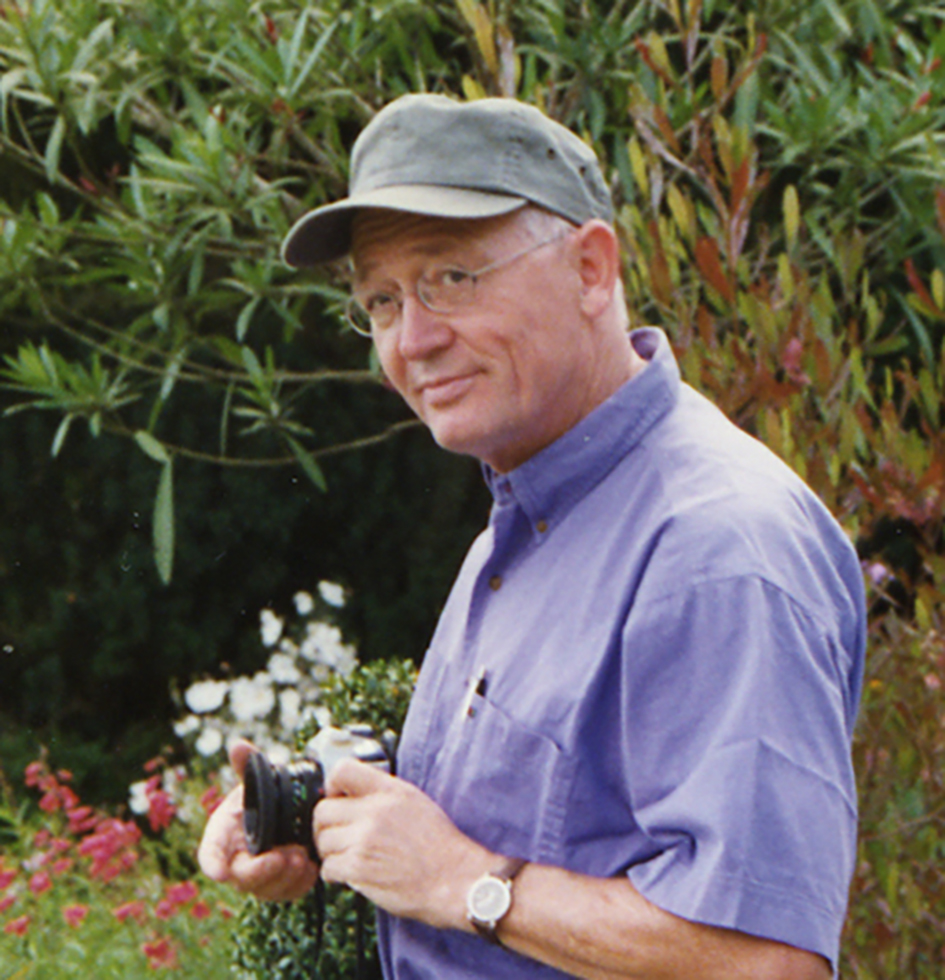
He started as a student in English and German Studies with a focus on the medieval period at Münster, but submitted a joint PhD-thesis in sociology of education at the then “rote Kaderschmiede” Bremen University. He found a job organising the now legendary Einphasige Lehrerausbildung in the founding period of Carl von Ossietzky University Oldenburg in the 1970s, where he became a member of staff in the English and American Studies Department in 1982. There he stayed until he retired as Akademischer Direktor in 2009. However, for many years he continued to teach courses on British sociopolitical issues to ensure that the focus remained on offer. Over these years and decades, he not only established Landeskunde (as it was called then) as a profile within English and American Studies at Oldenburg, but also helped to introduce and define British Cultural Studies as an academic field more generally. He was among those who stuck with an approach that took the material and institutional dimensions of social and polity structures as seriously as their discursive and representational ones – a consequence, perhaps, of both his training in Marxism and his childhood in the post-war Ruhr Area.
The Festschrift produced on the occasion of Richard’s retirement in 2009 bore the title The Workings of the Anglosphere. This summarises Richard’s understanding of Cultural Studies very well: analysing a phenomenon’s historical aspects, structural frameworks, and variations of agency, synthesizing approaches from social history, political science, sociology, and social geography, among others. This approach owed a lot to the work of E.P. Thompson, about whom Richard wrote two chapters in edited volumes (in 1992 and, with his colleague Jutta Schwarzkopf, in 2011). The intention was to give people and perspectives a voice that were – and are – too often overlooked in both academia and the ‘real world’. This giving voice took different shapes in different projects. Rise Like Lions: Sozialgeschichte Englands in Quellen und Dokumenten 1547-1915, published together with his friend, longtime colleague and collaborator, Jens-Ulrich Davids, in 1982, provided a deliberate counter-history to the dominant Whig approach, using the voices and testimonies of those people who had experienced the merciless character of power struggles first-hand. Richard did not write monographs but contributed to many edited books and (co-)edited several himself. He strongly propagated multi-disciplinarity and combined perspectives from different academic fields – this applies for example to his 1989 publication Die lange Wende: Beiträge zur Landeskunde Großbritanniens am Ausgang der achtziger Jahre, as well as for the 1996 The Past in the Present (again co-edited with Jens-Ulrich Davids), which included texts by historians, political scientists, urban geographers and scholars of literature. This latter book contained the proceedings of the Fifth Annual British and Cultural Studies Conference at Oldenburg in 1994. These meetings were the forerunners to what became later institutionalised as the BritCult conferences.
Most of his edited books and special issues were the product of conferences by either BritCult (e.g. Postsecular Britain, jointly edited with his Oldenburg colleague Anton Kirchhofer in 2009) or the German Association for the Study of British History and Politics (one co-edited with his friend Hans Kastendiek in 1994 and another one with Kastendiek and Roland Sturm in 1999: The Return of Labour. A Turning Point in British Politics?). The last book he reviewed for JSBC in 2024 duly dealt with politics as well – it discussed a monograph on British ‘landslide’ elections.
Cooperation was a distinctive feature of his work and it was very visible in his everyday struggles in the institution university (he taught us to navigate academia and its peculiarities) as well as in his interactions with students. Course discussions could be intense but would be defused by Richard’s self-ironic and jovial moderation just in time. His very special concept of teaching showed up most clearly in the numerous summer schools and excursions that he co-organised (again usually together with Jens-Ulrich Davids) – visits to Britain’s post-industrial realities or, less frequently, to the US, the most spectacular one tracing the 1804 Lewis & Clark expedition in 2005.
We wouldn’t be where we’re today without him.
Sebastian Berg (Bochum) & Jakob F. Dittmar (Malmö)